


 18 March, 2026
San Sebastian, 18 March 2026. - The machining and metal mechanical transformation industry has ended the financial year with a slight decline in turnover of 1.67%. In the analysis by subsector, machining remained virtually stable (-0.25%), whilst boilermaking and metal forming recorded a decline of 4.35%.
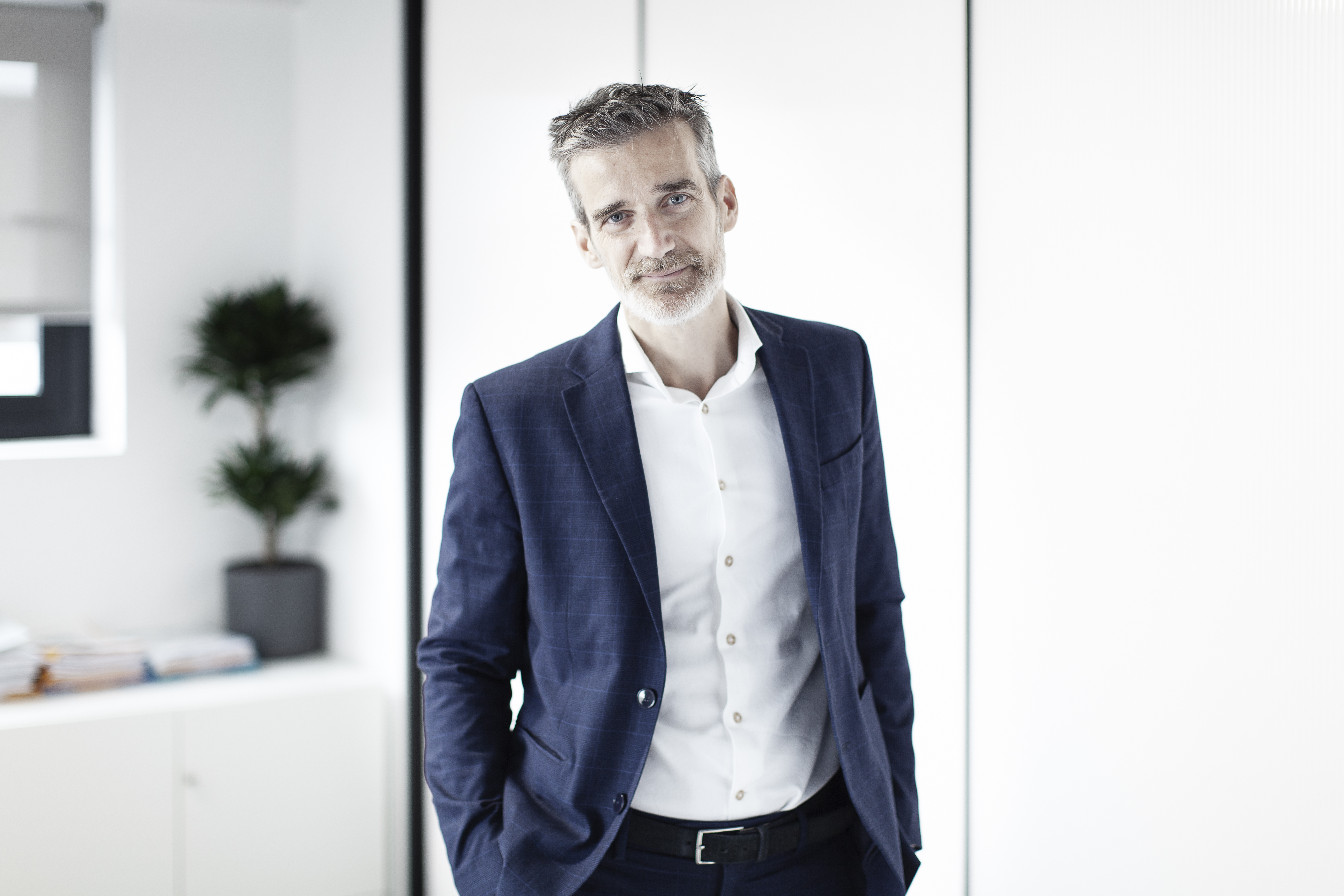
“Against an economic backdrop characterised by uncertainty and a slowdown in certain industrial sectors, the financial year shows a modest increase in activity. Although turnover has seen a slight decline, the sector is continuing to secure reasonable workloads, with the domestic market performing better than overseas markets. As is usually the case, the trend has been somewhat uneven, as it largely depends on each company’s client sectors”, says Fernando Gastaldo, president of AFMEC.
Exports account for 24.98% of the sector’s total turnover. Following a record-breaking 2024 in overseas markets, 2025 has seen a significant decline of 9.97%. The main export destinations were France (28.17%), Germany (15.73%) and the United States (9.07%), followed by Ireland (5.28%) and Finland (4.18%).
“Exports continue to be a mainstay of many companies in the sector. Despite the complexity and uncertainty of the international climate, which has had a significant impact on our overseas sales, our companies maintain a competitive position in demanding markets, demonstrating their high level in terms of technology and expertise”, adds Gastaldo.
AFMEC companies maintain a significant diversification of their client sectors. The main sectors are consumer goods, machinery manufacturing and machine tools (22.63%), followed by aeronautics and aerospace (12.66%), power generation (11.87%), the automotive industry and automotive parts (11.86%) and defence (5.56%).
On the topic of client sectors, Fernando Gastaldo explains: “The performance of our sector continues to be heavily influenced by the performance of our client sectors. We are seeing very different situations, with some strategic sectors, such as the automotive, oil and wind power industries, facing a period of considerable uncertainty, and this is having a direct impact on the operations of many companies. At the same time, other sectors such as defence, naval and aerospace are experiencing significant dynamism, creating new opportunities. This duality explains to a large extent the subdued growth in the sector’s aggregate turnover”.
As regards investment in machinery, the financial year has recorded a 24.88% decrease compared to the previous year.
“Following several years of heavy investment, this drop is largely a result of a normalisation cycle. Nevertheless, companies remain fully committed to modernising their production capabilities, aware that technology is a key factor in future competitiveness”, says the president.
Looking ahead, the president of AFMEC highlights concerns about the current international climate we are seeing: “The current level of activity allows us to face the short term with a degree of stability, although we remain very attentive to developments in industrial demand and the international geopolitical situation. The crisis unfolding in the Middle East is exacerbating the already high level of uncertainty in the sector, and some of its initial effects are beginning to be felt, such as the rise in oil prices. This situation could lead to an overall rise in raw material costs and a spike in inflation, which would have a direct impact on our companies’ operations. In this scenario, sectoral diversification and adaptability will be key factors in responding flexibly to potential market changes.”
The association has 215 member companies, each with an average staff of 28,85 people. The sector continues to grow in terms of the number of employees, with an upward trend of 2.76% in 2025.
Gastaldo highlights one of the sector’s main structural challenges: “The difficulty in attracting qualified talent remains one of the major challenges. The shortage of technical candidates is holding back the growth potential of many companies. Initiatives such as the JOIND.ES job platform, promoted by AFM Cluster, are essential for bringing the sector into contact with new professionals.”
AFMEC forms part of AFM CLUSTER, an organisation made up of over 800 businesses belonging to the advanced and manufacturing sector and which constitutes the country's top and most powerful industrial ecosystem: machine-tool and metal-mechanical transformation companies, manufacturers and importers of manufacturing technologies such as machine-tools and 3D printing, manufacturers of components and cutting tools, hand tools and special fastening and forming elements, automation technologies, robotics, industrial digitalisation and industrial startups.
KEY EVENTS 2026
Subscribe to our newsletter. Just insert your e-mail and you will receive the latest news.